
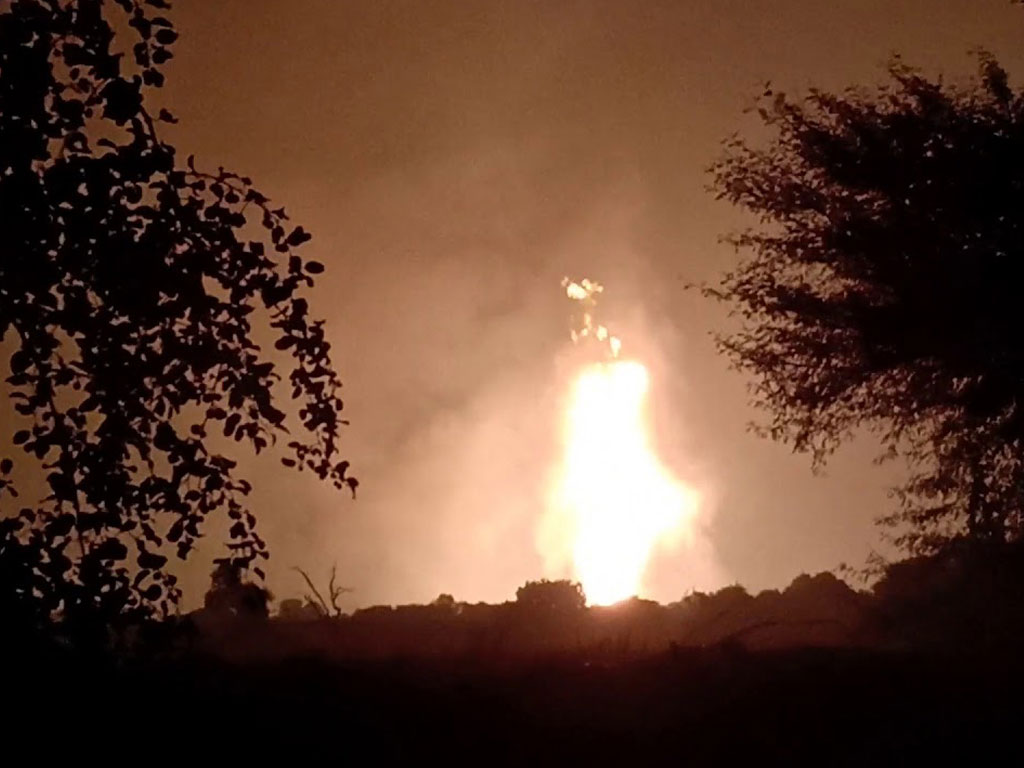
The 36-inch Regasified Liquefied Natural Gas (RLNG) pipeline supplying energy to several cities in southern and central Punjab was blown up in the Sadiqabad area on Tuesday, affecting industries, domestic consumers as well as power stations. Given the already delicate electricity situation, Federal Minister for Power Division, Omar Ayub Khan, felt compelled to issue a statement assuring the people the power supply situation had been managed through alternative fuel. That miscreants should be able to carry out such an act of sabotage is worrying enough. No less worrisome is the fact that this is not a one-off incident. Last month, a bomb was found attached to the same RLNG pipeline near the Sadiq Canal in Sardargarh area. Luckily, it was discovered by security guards and defused before it could do any damage. Furthermore, a press report quoting SNGPL chief engineer (transmission) reveals as many as 40 to 50 blasts had occurred, roughly in the same place, since 2002.
Yet it remains a mystery as to who the miscreants might be. The usual suspects in such cases are the Baloch insurgents. Since Sadiqabad is located at the border between Punjab and Sindh, they are less likely to be involved in this one. Some other group(s) may be busy causing gas supply disruptions to achieve their nefarious purposes. The alarming frequency with which these saboteurs have been acting is unacceptable. By now, the relevant agencies should have been able to identify and eliminate them. True, the adjoining area is covered by a dense forest, which is known to have been used as a hiding place by all sorts of criminals and terrorists. Not too long ago, however, the FC had conducted an operation there to take out these elements. In any event, the fact that the same area is targeted again and again shows the perpetrators live not very far from the scene of their crimes. It should not be so difficult for the police to identify them through their traditional system of gathering information on bad guys within their specific remits through local touts. Quite likely, the people in the area know who the culprits are and where they come from. If they know, the police surely know, too.
Admittedly, however, who they are up against are no ordinary criminals, but well-trained and well-equipped saboteurs who would not hesitate to take the next step and resort to terrorism. Normal policing cannot be expected to deliver the desired results. The more resourceful intelligence agencies need to step forward and help rid the place of these elements. The key responsibility for that falls squarely on the provincial government's shoulders. It must take a serious notice of the situation, and find a way of dealing with the menace in an efficient and effective manner.